Article
How to carry a rifle while hunting
How to carry a rifle while hunting
Carrying a rifle is something every hunter does – but how you carry it directly affects your safety, mobility, and effectiveness in the field.
In hunting situations, you rarely stand still. You move through terrain, use optics, handle gear, and often manage a dog. That requires both hands.
At the same time, your rifle must be secure, controlled and quickly accessible, and this is where many traditional carrying methods fall short.
Having your hands free matters
A rifle needs to be carried in a way that allows you to move efficiently, stay balanced and keep control of your surroundings. Poor carrying methods often lead to unnecessary fatigue, reduced mobility, less control of the rifle and slower reaction time, which over time will affect your performance in the field.
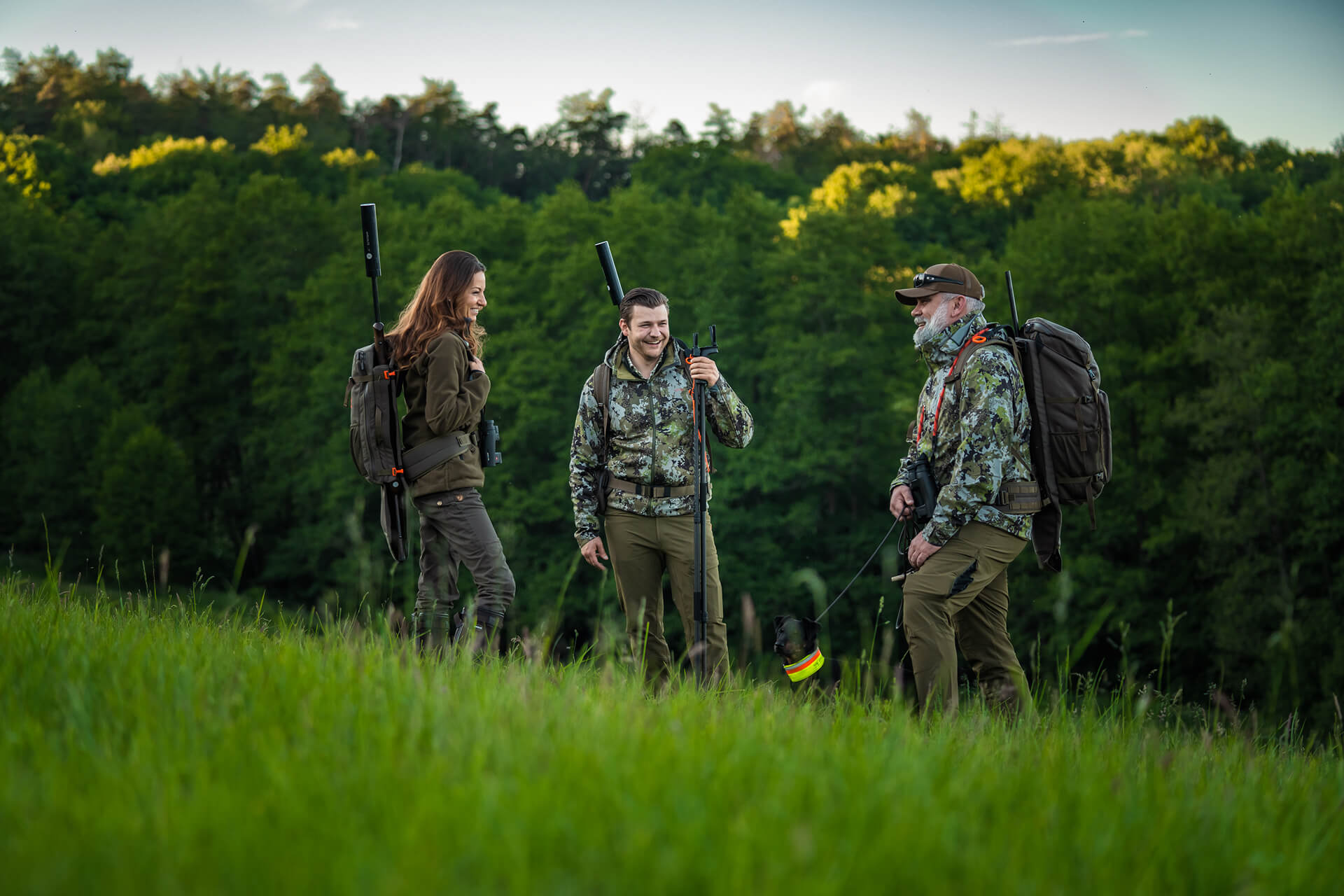
Hunting is rarely about standing still with a rifle ready, you are often on the move and need your hands for moving safely through the terrain, using binoculars or spotting scopes, managing gear or handling a dog.
When one or both hands are occupied by your rifle, things become more difficult with reduction of balance and limitation of your ability to react.
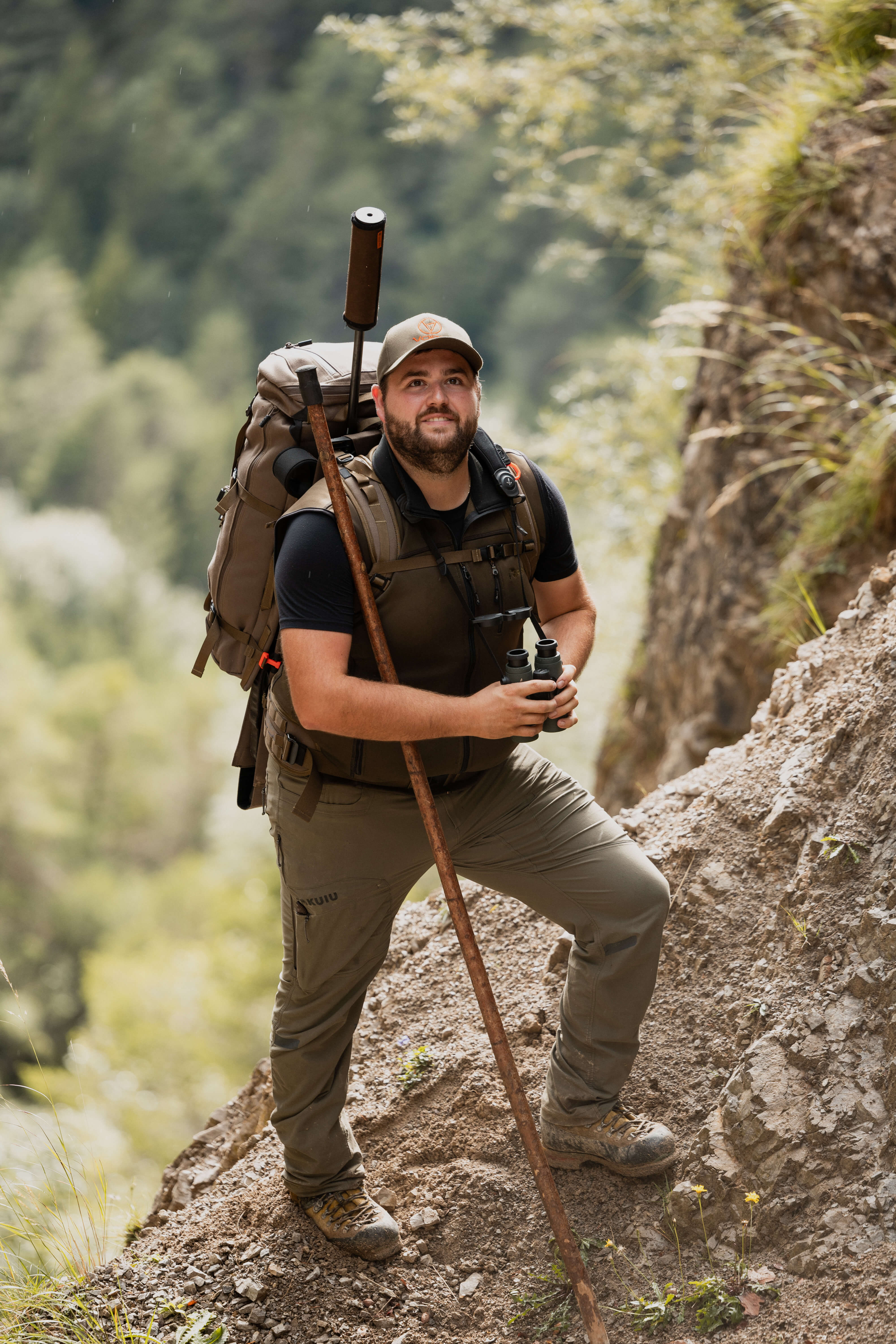
With a rifle backpack you can move naturally and stay focused on the situation instead of the rifle.
The most common ways to carry a rifle
1. Rifle sling (shoulder carry)
This is the most widely used method.
Pros:
- Simple
- No extra equipment required
- Fast to deploy
Cons:
- Constant pressure on one shoulder
- Rifle swings when walking
- Limited control in uneven terrain
- Often occupies one or both hands
- Less predictable muzzle direction
When moving in groups or through difficult terrain, reduced control of the rifle can become a safety concern.
2. Hand carry
Some hunters prefer to carry the rifle in their hands.
Pros:
- Full control
- Immediate access
Cons:
- Physically demanding
- One hand always occupied
- Reduces balance and mobility
- Not practical over longer distances
This method works best in short, high focus situations, not as a primary way of carrying.
3. Backpack-based carry
The rifle is carried as part of a backpack system.
Pros:
- Hands free
- Better weight distribution
- Stable and controlled position
- Improved mobility
Cons:
- Requires a dedicated solution
- Access speed depends on system design
This approach allows you to move efficiently while keeping the rifle secure and accessible.
Safety and control in the field
Safe rifle handling is not only about how you shoot, it is also about how you carry it.
A controlled carrying position helps ensure that the rifle stays stable while moving and reduces the risk for people around you.
Carrying the rifle securely on your back, with the barrel pointing upwards, is one of the safest ways to move in the field, especially when walking in groups or uneven terrain.
It keeps the rifle out of the way while maintaining full control at all times.
Different hunting styles require different demands
Stalking
Stalking requires quiet movement, control, and readiness. A loose rifle on a sling can create unnecessary movement and noise, at the same time, carrying it in your hands limits your ability to use optics or move efficiently. A stable, hands-free setup allows you to move with precision while staying ready.

Driven hunt
In driven hunts, safety and control are critical.
You often move with other hunters though dense terrain where a rifle that moves unpredictably can create unsafe situations. A secure and controlled carrying method ensures both safety and fast, reliable access.

Mountain hunting
Mountain hunting places the highest demands on your gear where you are dealing with steep terrain, long distances and heavy loads. In these conditions, both balance and energy efficiency are essential. With your hands free and a well-balanced carrying system you can move safely and maintain control over longer periods.

The key principles to efficient rifle carry
The most effective carrying methods follow the same principles:
1. Keep your hands free – allows you to move safely, use optics, and handle gear or dogs without compromise.
2. Maintain full control of the rifle – the rifle should remain stable and predictable at all times.
3. Ensure safe positioning – a consistent position reduces risk for both the hunter and others.
4. Distribute weight properly – balanced weight improves comfort and reduces fatigue.
5. Ensure fast access - when the moment comes, access must be quick and reliable.
A more efficient approach
Modern carrying systems are designed to improve both mobility and safety. Instead of choosing between comfort, control, and accessibility, they combine all three.
With systems like the VORN Rifle backpacks with Quick Rifle Release, the rifle is carried securely on your back in a stable, upward-facing position, while still being quickly accessible when needed.
This allows you to:
- Move with both hands free
- Maintain full control of the rifle
- Reduce strain over time
- Stay ready in critical moments
What you should choose
There are no one-size fits all solution, but one thing becomes clear across all hunting styles: the more you move, the more important your carrying system becomes.
- Short hunts benefit from better balance and control
- Driven hunts require safety and predictability
- Stalking demands quiet movement and readiness
- Mountain hunting requires efficiency over time
A well-designed carrying system improves how you move and operate in almost any hunting situation.
Summary
Most hunters never question how they carry their rifle, but small changes can have a significant impact on safety as well as comfort, mobility and effectiveness in the field. It is not about carrying less, it is about carrying smarter.
Learn more
If you want to learn more about carrying solutions developed to improve safety, control, and accessibility, you can learn more about VORN rifle backpacks here.

.jpg)